Independent reading desk·Plain-English explainers·No products, no pitches·Free to read, written in Amsterdam·Updated weekly·Independent reading desk·Plain-English explainers·No products, no pitches·Free to read, written in Amsterdam·Updated weekly·
Long-form essays on how organisations actually work.
An Insight on Airwalle is an essay between fifteen hundred and three thousand words. It is meant to be read in a single sitting, with a coffee, somewhere quiet. None of them try to sell you anything.
Insight · Operating model
The operating rhythm of a small Dutch firm
Published 14 March · 11 min read
From a strategy whiteboard during a small-firm review session, photographed in 2014.
Most owner-run companies in the Netherlands run on a weekly rhythm whose shape they have never written down. The Monday morning is for catching up; the Tuesday is the real working day; the Wednesday belongs to the e-mail backlog; the Thursday to half-finished promises; and the Friday to the kind of careful tidying that lets the team go home at four. This shape is not bad — but it is not designed, and a rhythm that is not designed is one that drifts.
The cheapest, most under-used strategy tool we know is the Monday-morning stand-up. Twelve minutes, standing, no chairs, no laptops. A single question for every person at the table: what is the most important thing on your plate this week, and what is the one thing that could stop you doing it. The exercise sounds trivial. In our reading, when it is run consistently for six months, it changes more in a small business than any annual planning offsite.
Why standing matters
The act of standing is the discipline. Sitting down lets the meeting expand to the size of the chairs. Standing keeps the meeting honest. We have seen Dutch family firms — in printing, in horticulture, in software — where the introduction of a twelve-minute Monday stand-up coincided, within one quarter, with a measurable reduction in the number of urgent Thursday e-mails.
Designing one that does not become theatre
The failure mode of every stand-up is theatre: people perform readiness rather than report it. Three rules tend to prevent the slide. First, the stand-up belongs to the team, not to the owner — the owner contributes last, not first. Second, no slide deck, ever; the agenda is a single sheet of paper on the wall. Third, the meeting is over at twelve minutes, even if it is not finished. Anything that did not fit into twelve minutes did not need to be in the stand-up.
What this gives the firm, over time, is a small, weekly, written record of what mattered — the kind of record that, when an owner finally sits down to write a strategic plan, has already done most of the work for them.
Insight · Strategy
Strategy on paper, before strategy on screens
Published 28 February · 8 min read
Most strategic decisions begin as ten or fifteen handwritten lines, on the corner of a kitchen table.
The first draft of any strategic plan should be handwritten. The reason is cognitive: the act of writing slowly, by hand, recruits a part of the attentional system that the keyboard does not. We are not making a romantic argument. We are making a practical one. A plan written first on paper tends to contain fewer borrowed words, and the cliché-detection of the pen is, in our experience, more honest than that of the autocomplete.
Try this one-evening exercise. Take a single A4 sheet. At the top, write the name of the business and the calendar year. Underneath, in your own handwriting, answer five questions in turn — what do we sell, who pays for it, what is the one thing we do better than the next firm down the road, what is the one thing we do worse, and what is the single decision the next twelve months will hinge on. Stop when the page is full. Do not turn it over.
The output is rarely a finished plan. The output is the part of the plan you actually believe — and that part is usually shorter, sharper, and more decisive than anything that comes out of a slide deck six weeks later.
Insight · Context
Why the Dutch SME reads strategy differently
Published 6 February · 12 min read
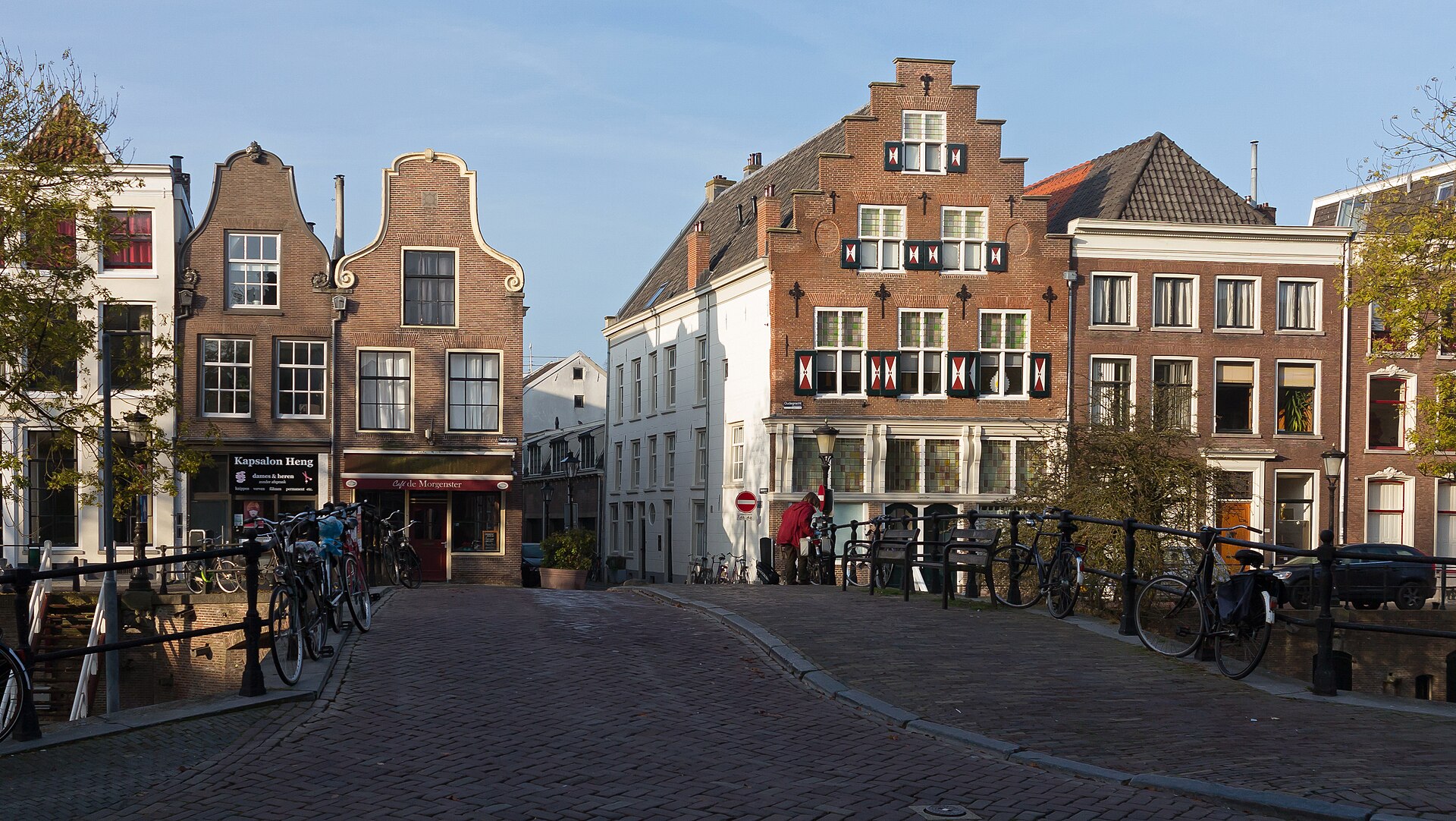
A square in central Utrecht; the small-firm landscape that most of our reading examples come from.
The Netherlands is a country of small and medium-sized firms. More than ninety-nine per cent of registered businesses employ fewer than fifty people. The strategic literature, however, is overwhelmingly written for the largest one per cent — global brands, listed companies, multinational organisations. Translating that literature for a forty-person firm in Almere or a twelve-person clinic in Maastricht is a real piece of work, and the translation is rarely done well.
Three differences are worth naming. First, the time horizon: a small firm plans on quarters, not on five-year cycles. Second, the cast: the “strategy department” is the owner, the bookkeeper, and the most senior employee, met around a table on a Friday. Third, the cost of a wrong move: in a global business it is a write-down on a slide; in a Dutch SME it is a person whose contract cannot be renewed. We try to keep all three differences in mind every time we publish an Insight.
Insight · Reading list
Five books we send to first-time owners
Updated quarterly · 9 min read
When somebody writes to us for the first time and says they have just bought a small business, we send them the same short reading list. It has been refined for four years and currently contains five titles — a mix of older classics and recent Dutch-language essays. We do not link to a bookstore. We expect you to find a copy at a public library, at the small bookshop near your office, or, failing that, second-hand.
The list, in the order we recommend reading it, is: Peter Drucker, The Effective Executive; Henry Mintzberg, Simply Managing; Mathijs Bouman, De Mythe van de Markt; Atul Gawande, The Checklist Manifesto; and Stephen Bungay, The Art of Action. Each entry on the website has a one-paragraph summary and a short note on the chapter we wish every new owner read first. We add titles roughly once a quarter and we drop titles when, on re-reading, we find we no longer recommend them.
We use a small number of cookies to remember your preferences and analyse traffic anonymously. See our Privacy Policy.