Independent reading desk·Plain-English explainers·No products, no pitches·Free to read, written in Amsterdam·Updated weekly·Independent reading desk·Plain-English explainers·No products, no pitches·Free to read, written in Amsterdam·Updated weekly·
One-page playbooks. Print, fold, stick to the wall.
Each playbook is a long, careful essay that compresses, on the final page, into a single A4 you can print, fold, and tape next to the kitchen kettle. Free to read, free to reproduce inside your own organisation.
Playbook · Process
Process mapping for non-process people
Published 21 March · 16 min read · Field-checked by 4 readers
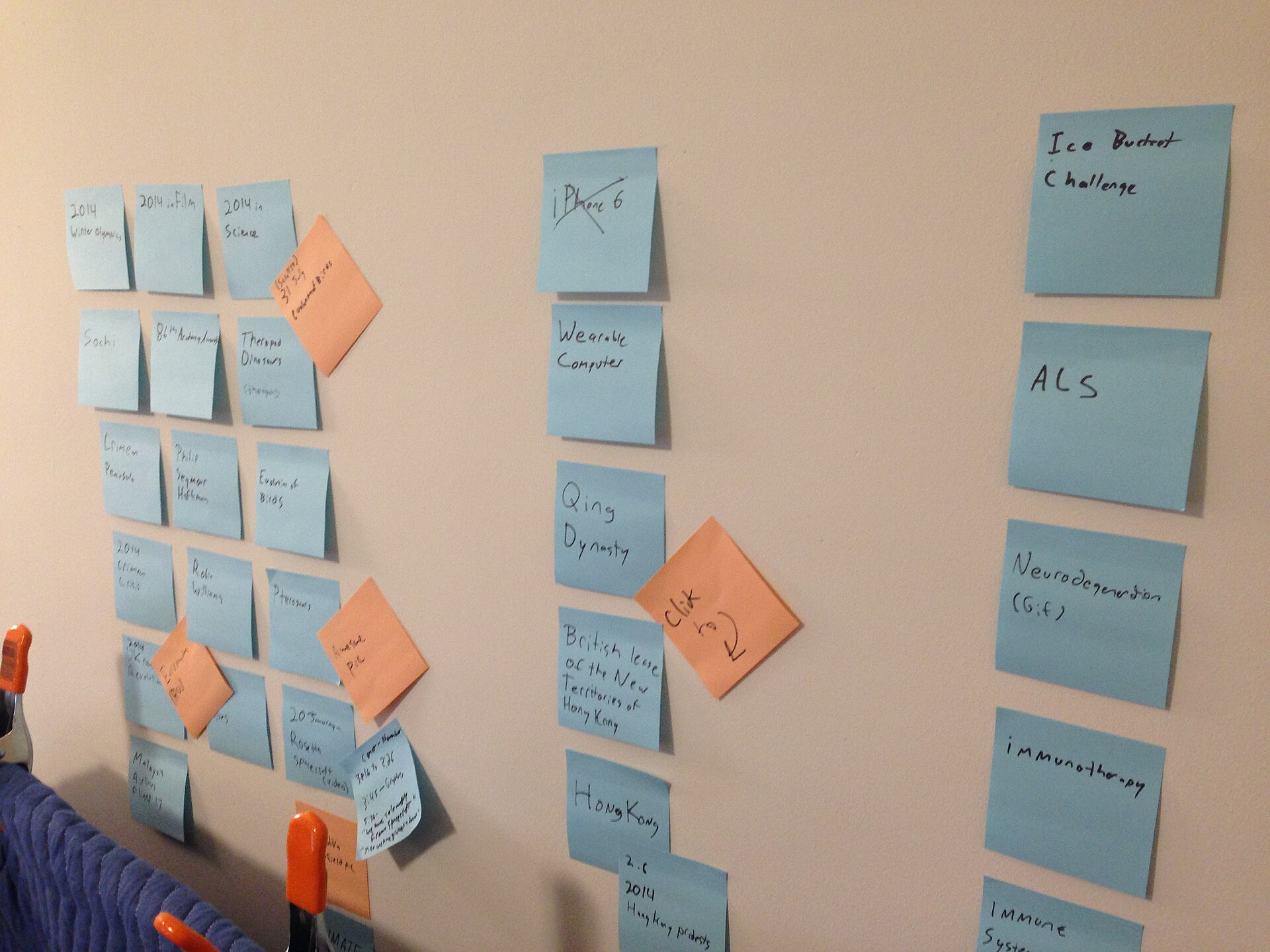
The output of a one-evening process-mapping session, photographed before the team went home.
Most small organisations do not need software to draw a process map. They need a wall, a pad of sticky notes, and three plain questions. The six-step playbook below has been used, in one form or another, in a Rotterdam dental clinic, an Eindhoven engineering firm, and a Friesland bakery; the bakery’s version is taped to the office wall and has been there for two years.
Step 1 · Pick one process, narrow.
Resist the temptation to map everything. Pick a single process — the moment a customer order arrives until the moment it is paid for, or the moment a patient walks in until the moment they leave. The narrower, the better. The whole exercise is about understanding one piece, well, before you generalise.
Step 2 · Stand at the wall, not the screen.
Bring three people. The owner. The person who actually does the work. The person who receives the work afterwards. No one else, on the first pass. Stand. Do not sit down. The whole session takes between forty and ninety minutes.
Step 3 · One sticky note per step.
Write each step of the process on its own sticky note, in the present tense, starting with a verb. “Customer phones the office.” “Bookkeeper records the order.” “Driver loads the van.” Stick them on the wall in the order in which they actually happen. Not in the order you wish they happened.
Step 4 · Mark the three plain questions.
Walk along the wall and, for every sticky, ask three questions. Where does the work wait? Where does it move between people? Where does information get lost? Mark each note with a small W, M or L. Most of the value of the exercise is in the marks.
Step 5 · Photograph the wall.
Photograph the entire wall, in good light, before anyone takes anything down. The photograph is the record. Print it out. Tape it to the wall it came from. Date it.
Step 6 · Pick one improvement, ship it within a week.
The temptation, after a process-mapping session, is to write a thirty-page plan. Resist. Pick one improvement — usually one of the M marks — and implement it within seven days. The point of the exercise is not the map. It is the action that follows the map.
One-page summary
The full one-page summary, designed to be printed on a single sheet of A4 and taped to the office wall, is reproduced in the print issue and on the kitchen wall of every organisation we have worked with.
Playbook · Planning
The one-page strategic plan
Published 7 February · 14 min read · Field-checked by 5 readers
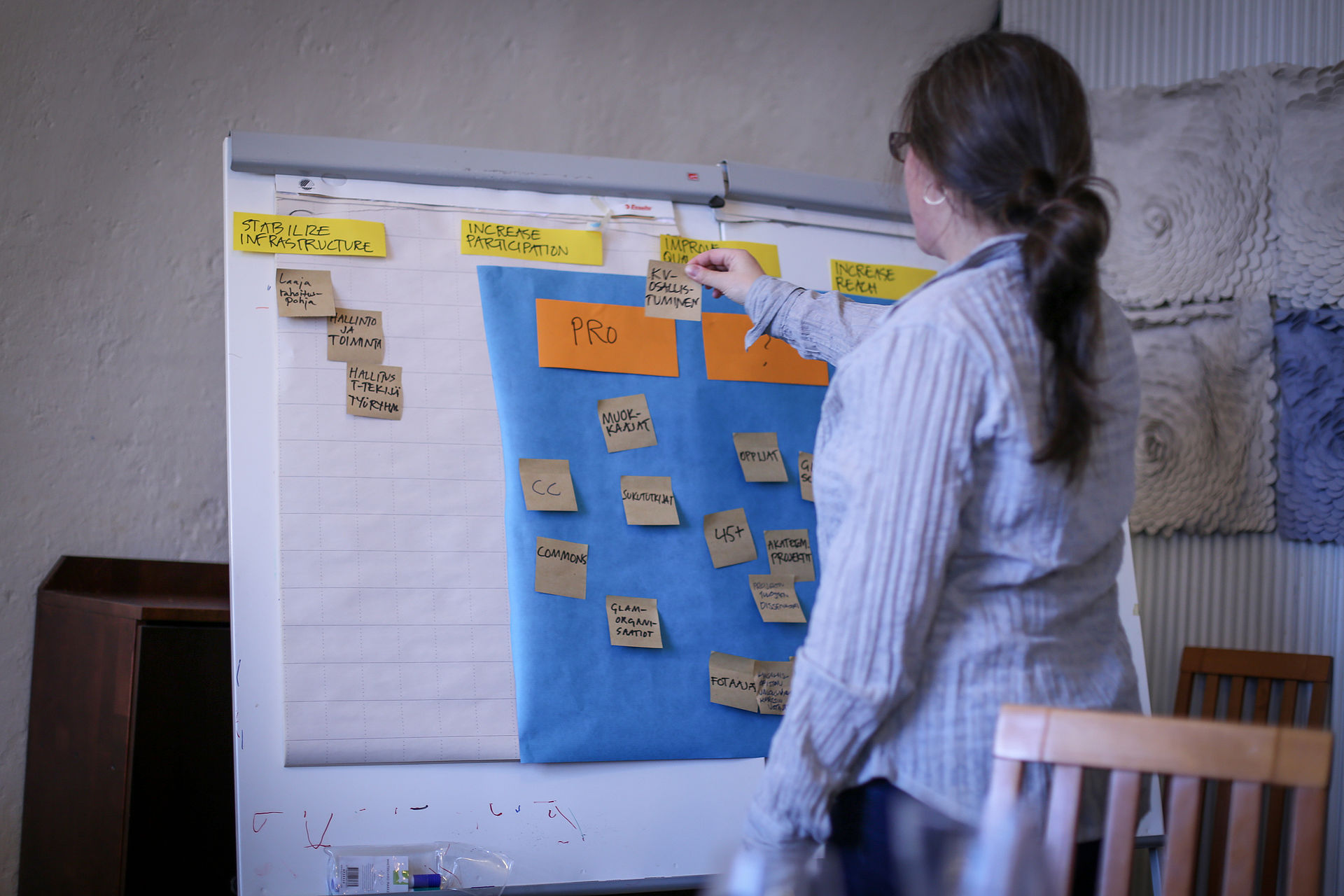
Mid-session photograph of a one-page plan being drafted on a whiteboard before being copied to A4.
The one-page strategic plan has five fields. Owner-name. Calendar year. The three things we will do this year that we did not do last year. The two things we will deliberately stop doing. And — the field most plans miss — the single decision we will revisit at the half-year. That is the entire template. Anyone who tells you a plan needs more fields than that is selling you the template, not the plan.
The exercise of filling the page is the discipline. We recommend two evenings, one week apart. The first evening is a draft, by hand, alone, on the kitchen table. The second evening is a re-read with one trusted colleague — the bookkeeper, the most senior employee, or, in the case of an owner-operator, the person who knows the customers best. After the two evenings, the plan is either ready or it is not. If it is not, take a third evening; do not take a fourth.
Field 1 — Owner-name and year
Sounds trivial. Is not. The plan belongs to a person, not to a company; that is the whole point of writing it on a kitchen table. Putting the owner-name on the top of the page is the moment the plan stops being abstract.
Field 2 — Three new things
Three is the right number. One feels too small to commit; five feels too big to defend. Three things you will do this year that you did not do last year. Each described in a single sentence, in the present tense.
Field 3 — Two deliberate stops
The hardest field. What are we going to stop doing in order to make the three new things possible? An organisation that adds without subtracting becomes, within two years, an organisation that no longer remembers its own priorities.
Field 4 — The single hinge decision
One sentence. One decision. The plan’s pivot. The thing that, if it goes one way, the other four fields stay the same; if it goes the other way, the entire plan changes shape.
Field 5 — The half-year date
A date in July. A two-hour reading meeting. The plan is read aloud, in full, with the same person who read the second evening. Either nothing changes, in which case the meeting is over in twenty minutes; or the plan changes, in which case the new version is on a fresh sheet of paper by Friday.
Playbook · Cadence
A meeting cadence that does not eat your week
Published 17 January · 13 min read
The corner of an Amsterdam home office where most of this playbook was actually written.
Every owner-run company we have read about needs four meetings, and only four. The Monday stand-up. The mid-month operations review. The quarter-end strategy read. The half-year plan revision. Anything else is, in our experience, either avoidable or a symptom of a process problem that the meeting is masking. The full essay walks through each of the four, with an agenda template, a typical duration, and the failure mode to watch for.
Playbook · Operations
The clean hand-off between roles
Published 4 January · 12 min read
The everyday setting of most knowledge work — and most quality losses.
The moment a piece of work moves from one person to another — the customer brief from the salesperson to the project lead, the patient file from the receptionist to the doctor, the order from the office to the workshop — is, in our reading, where most quality is lost in a small organisation. The playbook describes a four-line hand-off note that any team can adopt this week, and the failure modes that emerge when the discipline lapses.
We use a small number of cookies to remember your preferences and analyse traffic anonymously. See our Privacy Policy.